Purchases through VeloAudit affiliate links may earn us a commission at no extra cost to you. How VeloAudit affiliate links work
Shopping for a waterproof bicycle pannier often reveals a confusing mix of terminology. Marketplace listings frequently conflate single-side rail panniers, top-mounted trunk bags, and double-sided throwover packs under generic search labels like "seat pannier" or "rear travel bag." However, how a bag attaches to your frame and how it seals against rain drastically affect its daily utility on a wet commute.
To choose the right bag, you must assess three practical factors: the attachment system (rail hooks versus deck straps), the closure mechanism (roll-top dry seals versus exposed zippers), and fabric construction (high-frequency welded seams versus stitched textiles).
Dedicated Side Pannier: High-Capacity Wet-Weather Commuting
A traditional bicycle pannier hooks to the vertical rail of a rear cargo rack, keeping weight low and centered beside the rear wheel. This style provides the best ergonomics for carrying laptops, groceries, or a change of work clothes while preserving clearance under the saddle.

The Rhinowalk 20L Bike Pannier Bag represents the classic single-side commuter build. At an official 20-liter stated volume, it utilizes a roll-top buckle closure reminiscent of outdoor dry bags. Manufacturer designs in this category—such as Rhinowalk's heavy-duty welded panniers—rely on smooth tarpaulin or coated synthetic fabrics that shed road grime and road spray cleanly.
Crucially, this design includes off-bike adaptability, converting into a shoulder bag or backpack when you lock your bike. Proper fit relies on an adjustable rail-clip system: typical installation guidelines, such as those from Lectric eBikes, emphasize securing both top rack clips and an adjustable lower retention hook or finger knob to prevent the bag from pivoting into your rear wheel spokes.
Double-Sided Panniers: Balanced Bulk on a Budget
Riders who need balanced cargo without purchasing two independent panniers often turn to twin, bridge-style bags that drape over the top of the rear rack.
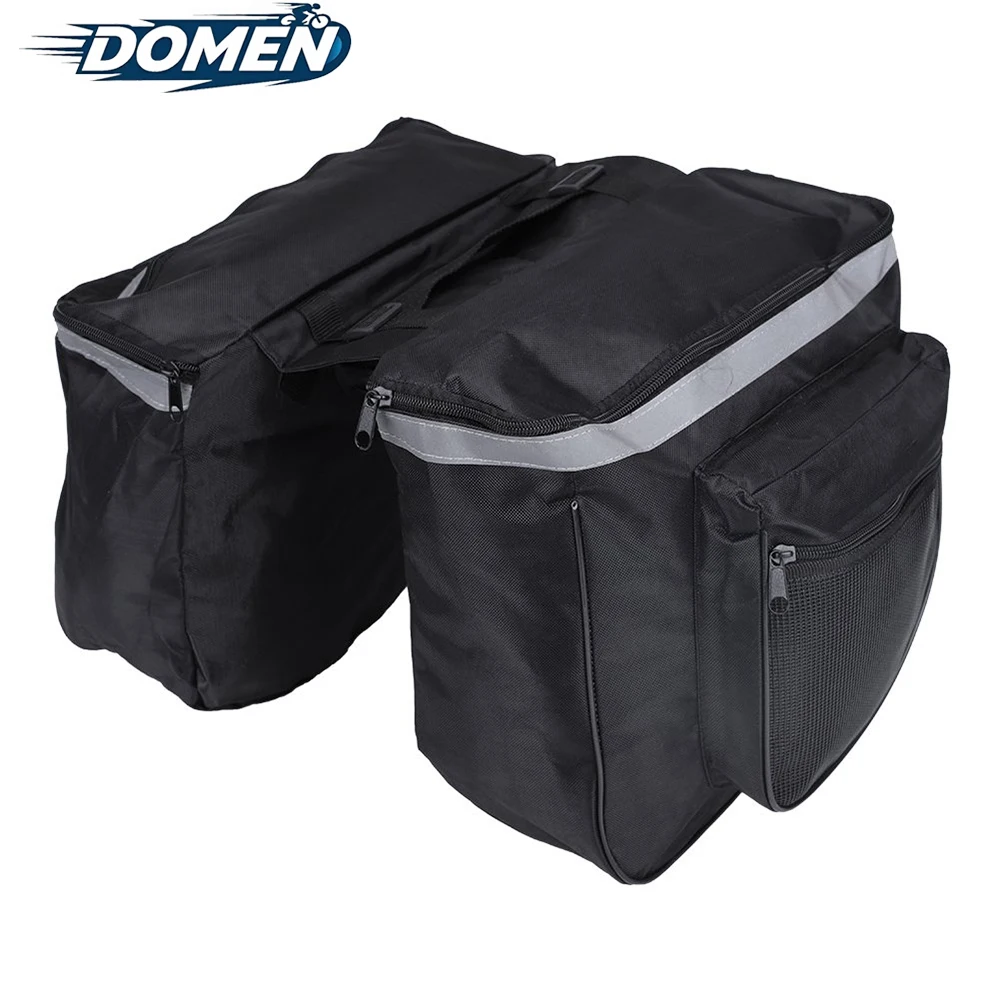
The DOMEN Double Side Pannier Bag distributes storage evenly across both sides of the rear wheel. With external slip pockets and full-length zippered openings, it offers quick access for casual utility cycling, running errands, or moderate leisure tours.
However, evaluate the listing details carefully before taking it out in sustained rain. Because this model relies on zippered compartments and conventional stitched fabric rather than welded roll-tops, its "waterproof" designation should be treated with caution. Water will eventually migrate through standard stitching during prolonged wet-weather riding unless supplemented with an external rain cover or interior dry sacks. Additionally, double-sided throwover bags rely on fixed webbed straps, meaning you cannot easily detach just one side for a quick trip into an office.
Rack-Top Trunk Bags: Compact, Low-Profile Utility
Many marketplace listings label top-deck trunk bags as "panniers" or "seat bags." Unlike side panniers, trunk bags sit directly atop the flat deck of your rack, fastened via bottom straps. They preserve a narrow profile, reducing aerodynamic drag and eliminating the risk of heel-strike while pedaling.
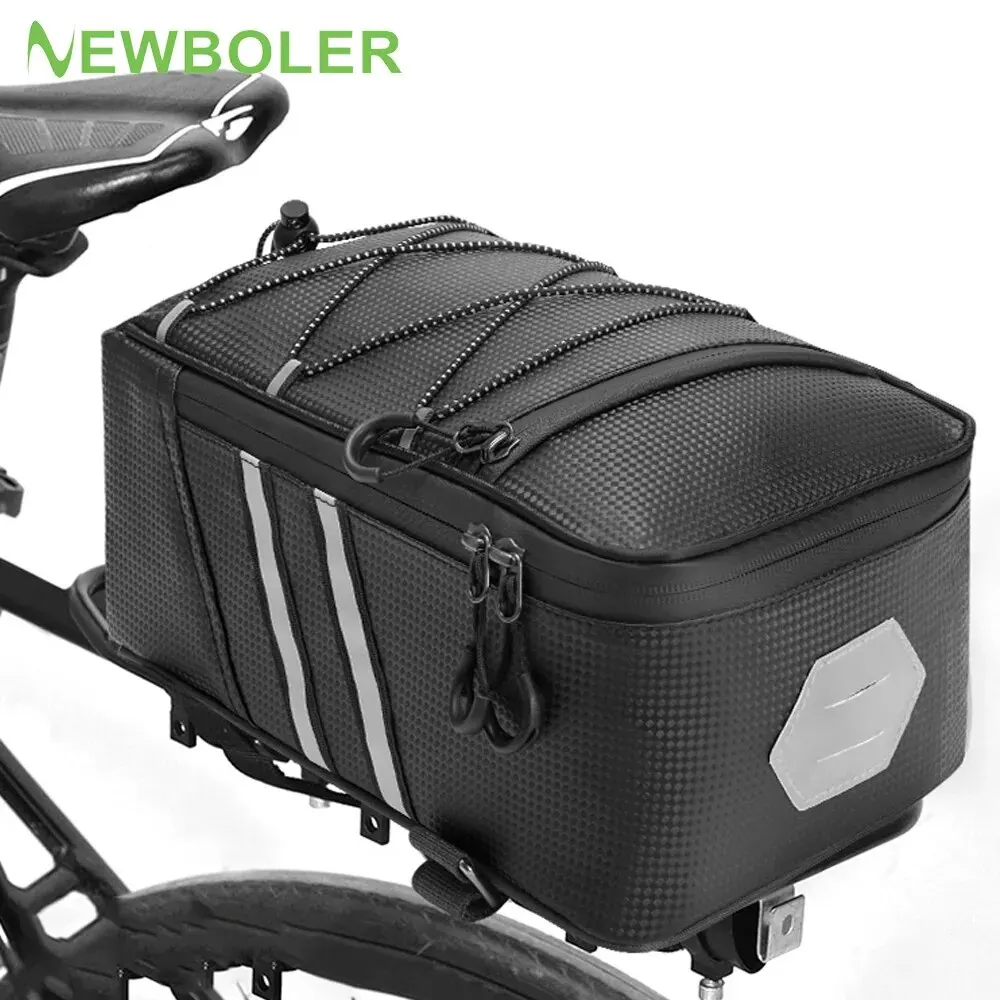
The NEWBOLER Rear Rack Trunk Bag features a semi-rigid box structure with an external carbon-pattern texture, high-visibility reflective side striping, and an integrated top bungee net for securing an extra windbreaker or pump. Its deck-mounted position makes it suitable for riders who find side panniers unwieldy or whose frames have short chainstays that cause heel interference.
Its primary compromise is internal volume: a trunk bag cannot accommodate standard work folders or large laptop sleeves. Furthermore, the zippered main lid means it resists light road spray better than torrential cloudbursts, making it best suited for day rides, tools, and mid-ride lunch stops.
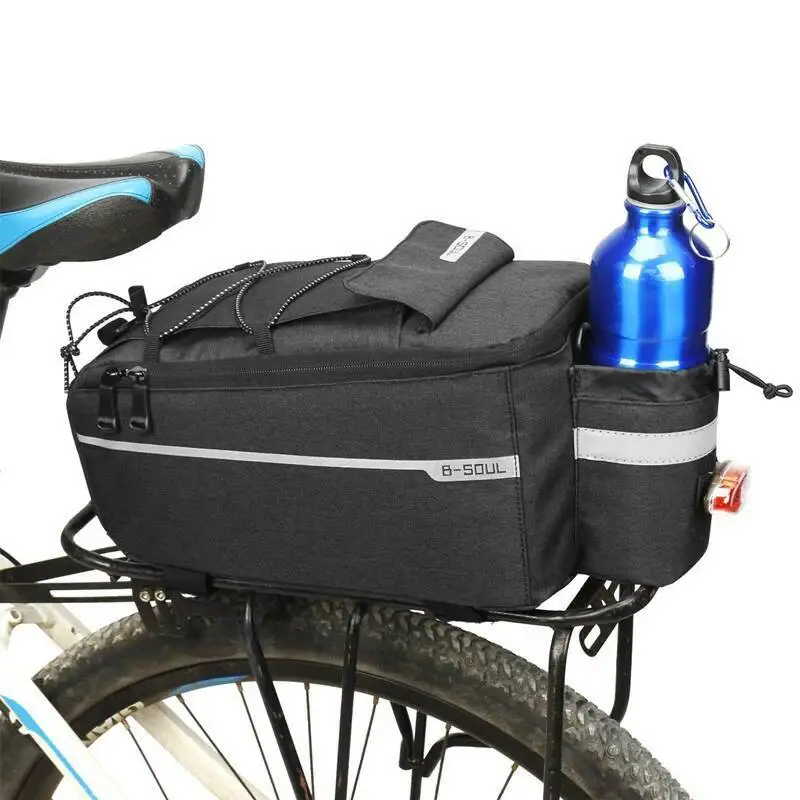
The ESLNF / B-SOUL Rear Trunk Bag takes a similar top-deck approach, adding an integrated rear bottle holster with an elastic cinch cord. This layout is practical for bikes that lack bottle cage mounts inside the main triangle, such as full-suspension mountain bikes or compact step-through frames equipped with a rear cargo rack.
Note that while the listing title includes "Seat Cycling Pannier," the product imagery confirms it is a rack-deck trunk pack requiring a rear rack platform. The fabric is water-resistant textile with exposed zippers; like similar budget accessories, delicate electronics should be packed in sealed plastic bags during severe rain.
Choosing the Right Format for Your Commute
Match your selection to your cargo type and typical weather exposure rather than relying solely on seller titles:
| Bag Type | Attachment Method | Primary Advantage | Weather Resistance Level | Best For |
|---|---|---|---|---|
| Single Side Pannier (e.g., Rhinowalk) | Rack rail hooks & lower anti-sway clip | Roll-top dry protection, laptop capacity, off-bike carry | High (Roll-top seal) | Daily year-round commuters & touring |
| Double Side Pannier (e.g., DOMEN) | Throwover straps across top deck | Balanced dual-side cargo at entry-level price | Moderate (Stitched & zippered) | Grocery errands & fair-weather weekend utility |
| Rack Trunk Bag (e.g., NEWBOLER / ESLNF) | Straps/hook-and-loop to rack deck | Slim profile, zero heel strike, external bottle/gear holders | Moderate to Light (Top zippers) | Day trippers, repair kits, lunch & jacket storage |
Pre-Purchase Verification Tips
- Check Heel Clearance: If your bike has short chainstays (common on road and cyclocross frames), full-size side panniers can contact your heels while spinning. Ensure your rack allows rearward rail positioning or opt for a top trunk bag.
- Inspect Hardware: Rail-mounted panniers need secure lower hooks. Always verify that your rear rack tubing diameter (typically 8 mm to 16 mm) matches the pannier's hook sizing.
- Plan for Cable and Bottle Storage: Trunk bags with exterior bottle sleeves (like the ESLNF model) save frame space, but ensure the bag's rear overhang does not obscure your taillight or reflector.